
GREATER BOSTON CHAMBER OF COMMERCE FOUNDATION
Two-Part Revenue Small Business Strong Strategy Series Sponsored by Blue Cross Blue Shield of Massachusetts
Engagement Summary
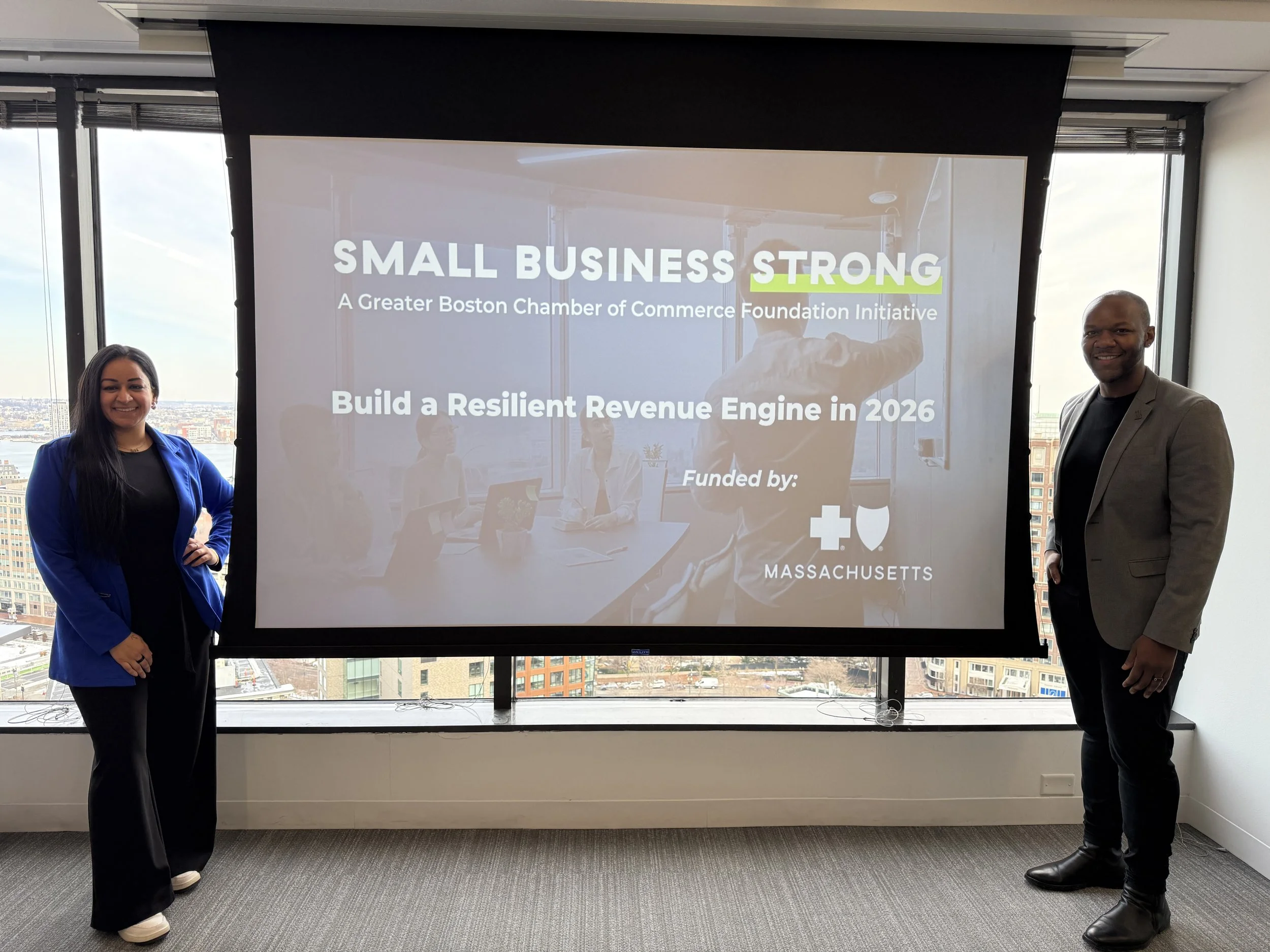
Oak Lane partnered with the Greater Boston Chamber of Commerce Foundation to produce and deliver a two-part webinar series sponsored by Blue Cross Blue Shield of Massachusetts. The series was hosted under the Foundation's Small Business Strong initiative, a technical assistance program that has served more than 3,600 businesses and preserved nearly 10,000 jobs across Greater Boston.
Designed for small business owners and nonprofit leaders from historically excluded communities, the series gave participants a structured, practitioner-level framework for building revenue operations that generate consistent, scalable growth.
The Challenge
Small business owners and nonprofit leaders in Greater Boston face a persistent structural gap. Revenue built on a single income stream. Offerings misaligned with what buyers are actually purchasing. No clear pathway into the supplier and procurement ecosystems that generate long-term contract revenue.
These are strategic problems. They require a revenue operations lens to solve, and they are problems that most small business programming never addresses at the level of depth practitioners need.
The GBCC Foundation brought Oak Lane in to close that gap.
Session One: Rethink the Revenue Stack
The opening session introduced a revenue architecture framework built around three core disciplines.
Revenue Diversification Architecture. Participants mapped their existing offerings against multiple income streams, identified where single-point-of-failure risk lives, and located adjacent revenue opportunities already aligned with buyer demand.
Demand-Supply Alignment. Oak Lane introduced a pre-pipeline diagnostic practice for interrogating the gap between what a business sells and what its target buyers are actively trying to purchase. Most operators build pipelines on top of a misalignment problem. This session addresses that before it compounds.
Supplier Ecosystem Readiness. The session connected revenue strategy to supplier diversity pathways and institutional procurement channels, building a direct bridge between day-to-day revenue operations and long-term contract opportunities.
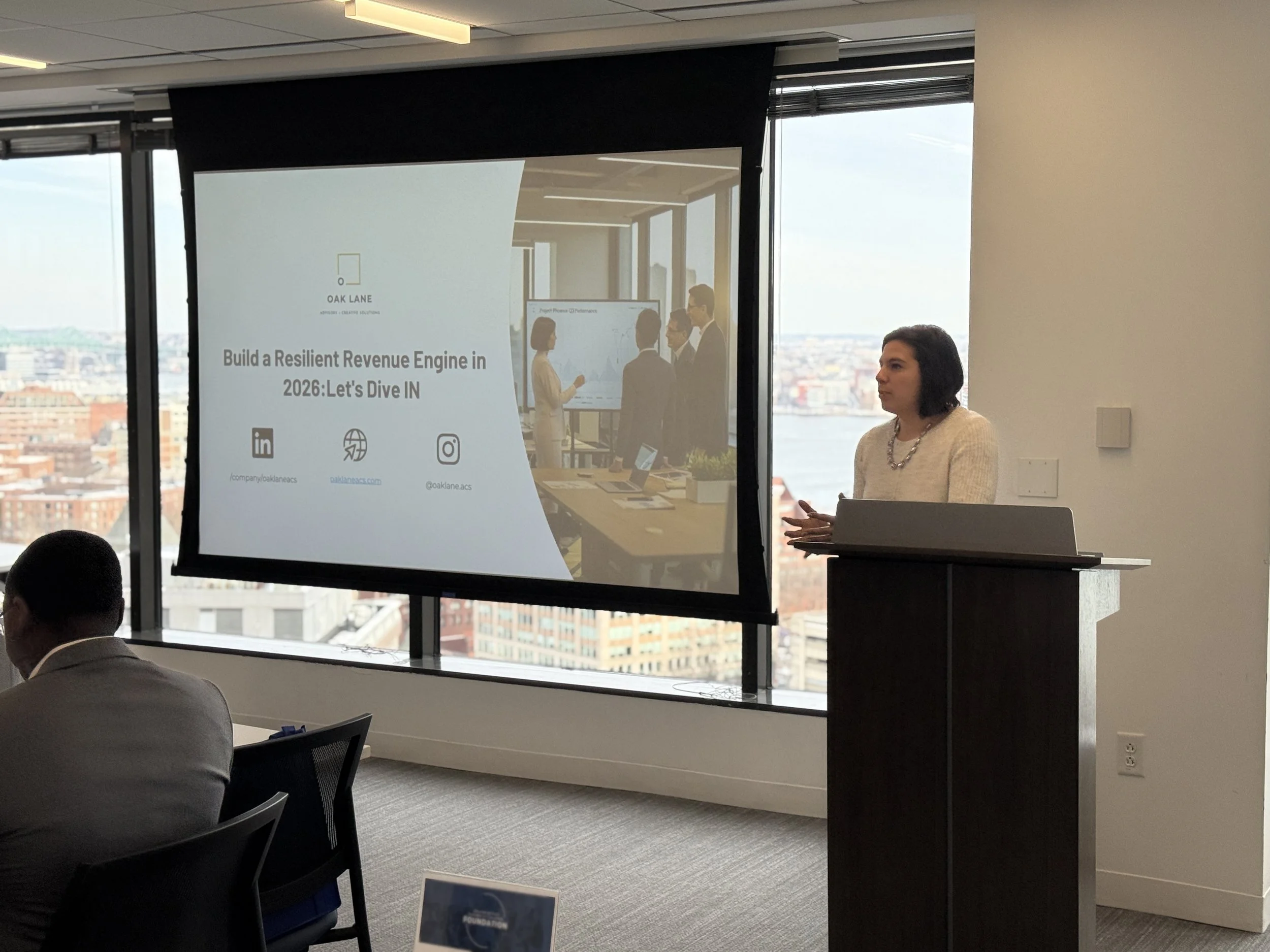
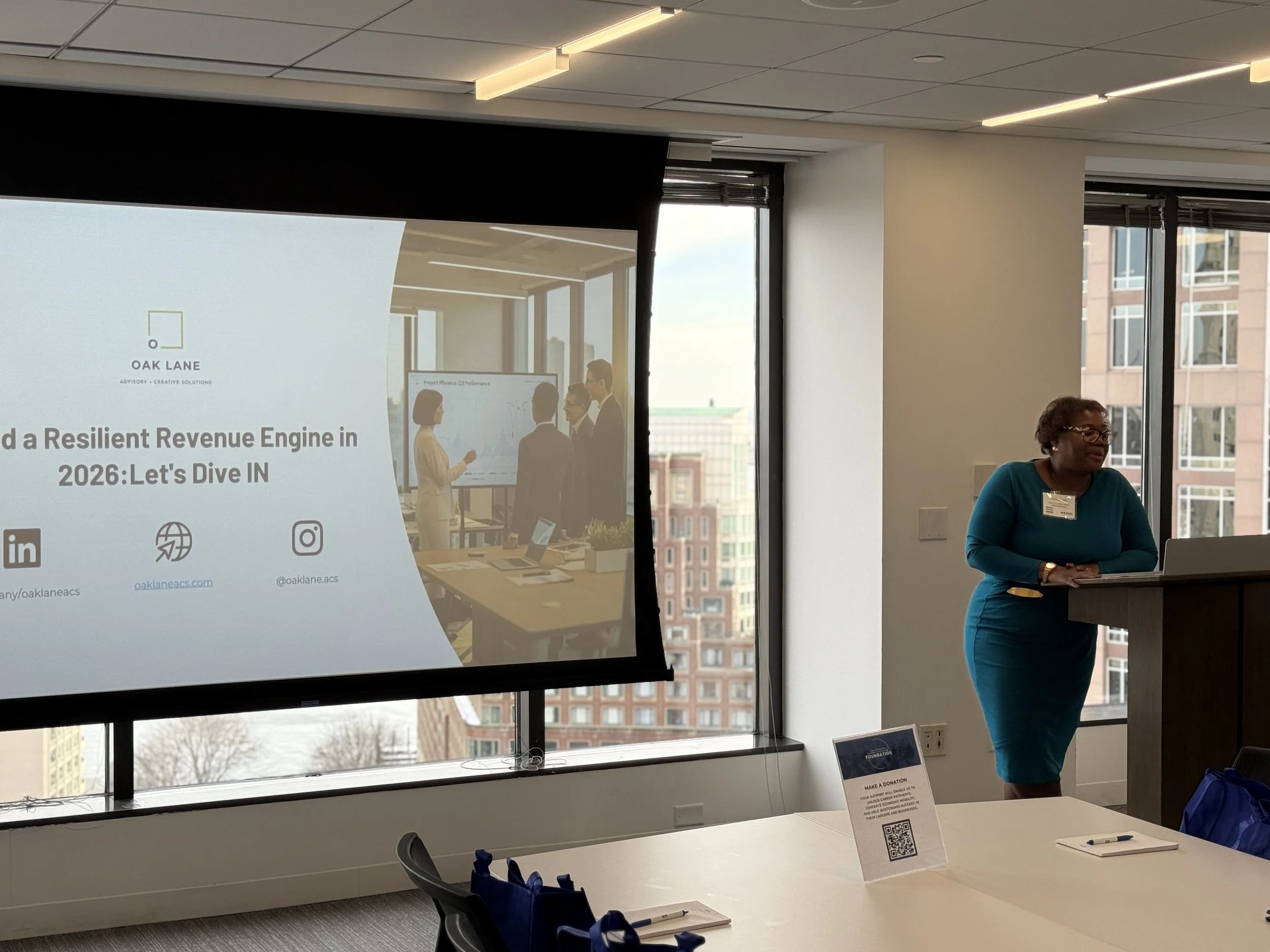
Session Two: Build a Resilient Revenue Engine in 2026
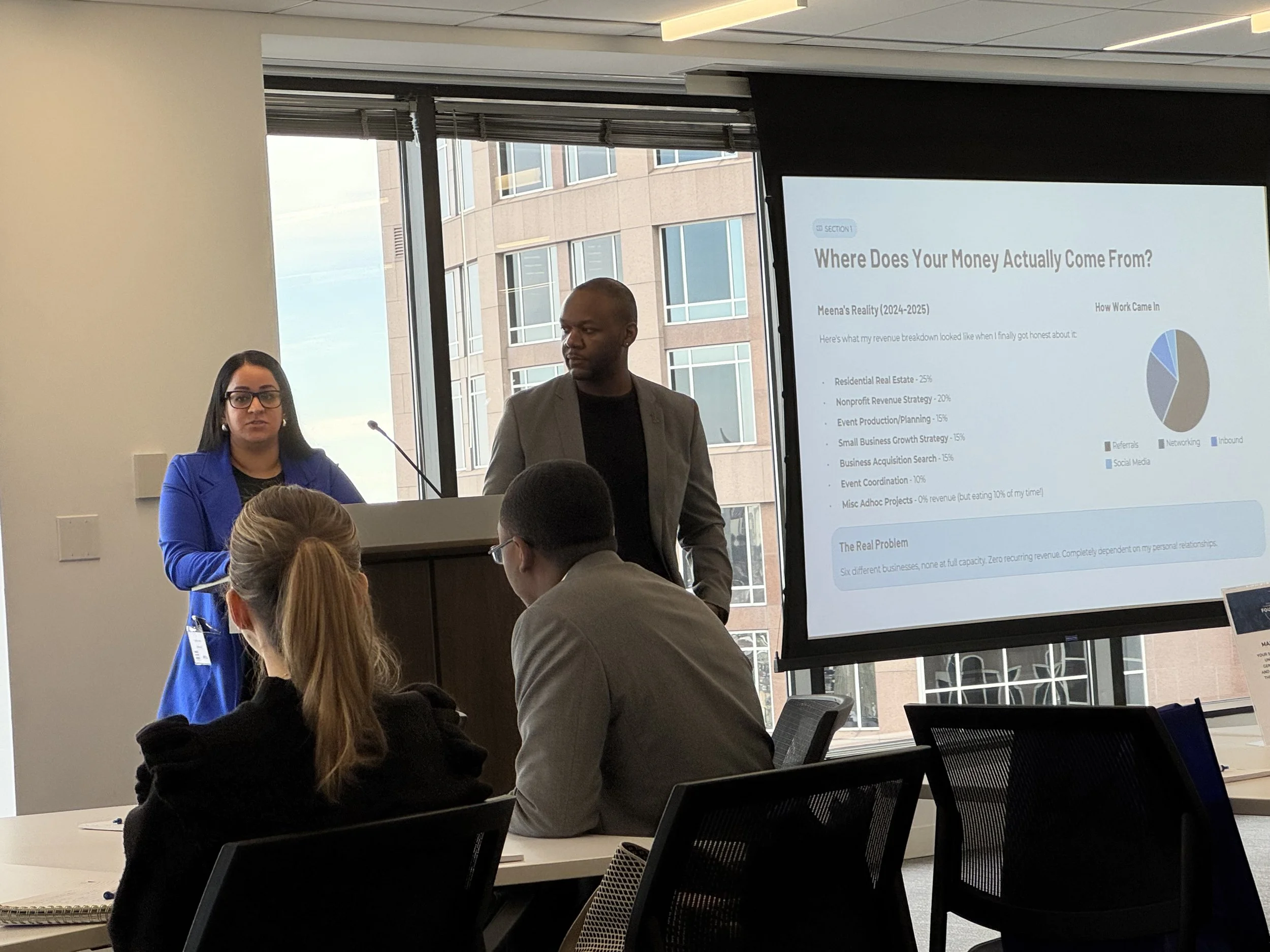
The second session translated the revenue strategy into a marketing execution framework. Participants left with a clear, actionable marketing roadmap tailored to their business, covering brand identity refinement, audience-aligned messaging, and leveraging digital platforms to drive visibility and revenue growth.
The session was co-facilitated by Oak Lane Meena Sharma, who brought a financial strategy and revenue systems lens rooted in nearly 15 years of experience in finance, operations, and growth advising.
FAQs
5
What does it mean to rethink your revenue stack as a small business?
1
Rethinking your revenue stack means auditing every income stream a business relies on, identifying which are fragile or misaligned with buyer demand, and building a diversified model with multiple, sustainable paths to revenue. For most small businesses and nonprofits, that means integrating earned revenue, fee-for-service work, and institutional contract revenue into a cohesive, scalable strategy.
How does revenue strategy consulting help small businesses in Boston?
2
Revenue strategy consulting moves small businesses from reactive selling to proactive pipeline development. Oak Lane helps founders clarify their value proposition, align offerings with market demand, and build the operational systems, including CRM architecture, outreach sequences, and partnership frameworks, that convert strategy into recurring revenue.
What is supplier ecosystem readiness for small businesses?
3
Supplier ecosystem readiness is the process of preparing a business to compete for and win procurement contracts with institutions, corporations, and government agencies. It involves aligning service offerings, compliance posture, and revenue infrastructure with the sourcing criteria of institutional buyers.
What is Oak Lane's HOUR Framework?
4
The HOUR Framework (Hypothesize, Operationalize, Understand, Refine) is Oak Lane's proprietary methodology for diagnosing revenue gaps, designing growth systems, and building the operational infrastructure leaders need to scale with confidence. Applied to revenue operations, it provides a structured process for pressure-testing assumptions, building pipeline systems, and refining strategy based on real market feedback.
How does Oak Lane work with small businesses?
Oak Lane works with small businesses through strategic advisory engagements, fractional leadership, and structured workshops. Every engagement applies the HOUR Framework to move clients from diagnosis to execution, building the systems and strategy needed to generate consistent, scalable revenue.